A jar may simply say “cinnamon”, but the name covers more than one kind of bark. Understanding that distinction helps you make a more informed choice for your kitchen.
First, a question of identity
Ceylon cinnamon is Cinnamomum verum, also known as Cinnamomum zeylanicum. It grows primarily in Sri Lanka. Cassia is another type of cinnamon; the name is also used collectively for several related commercial varieties. Both belong in a conversation about cinnamon, rather than a simplistic division into “real” and “fake”. NCCIH’s cinnamon overview explains the botanical distinction.
A practical comparison
| What to look for | Ceylon cinnamon | Cassia cinnamon |
|---|---|---|
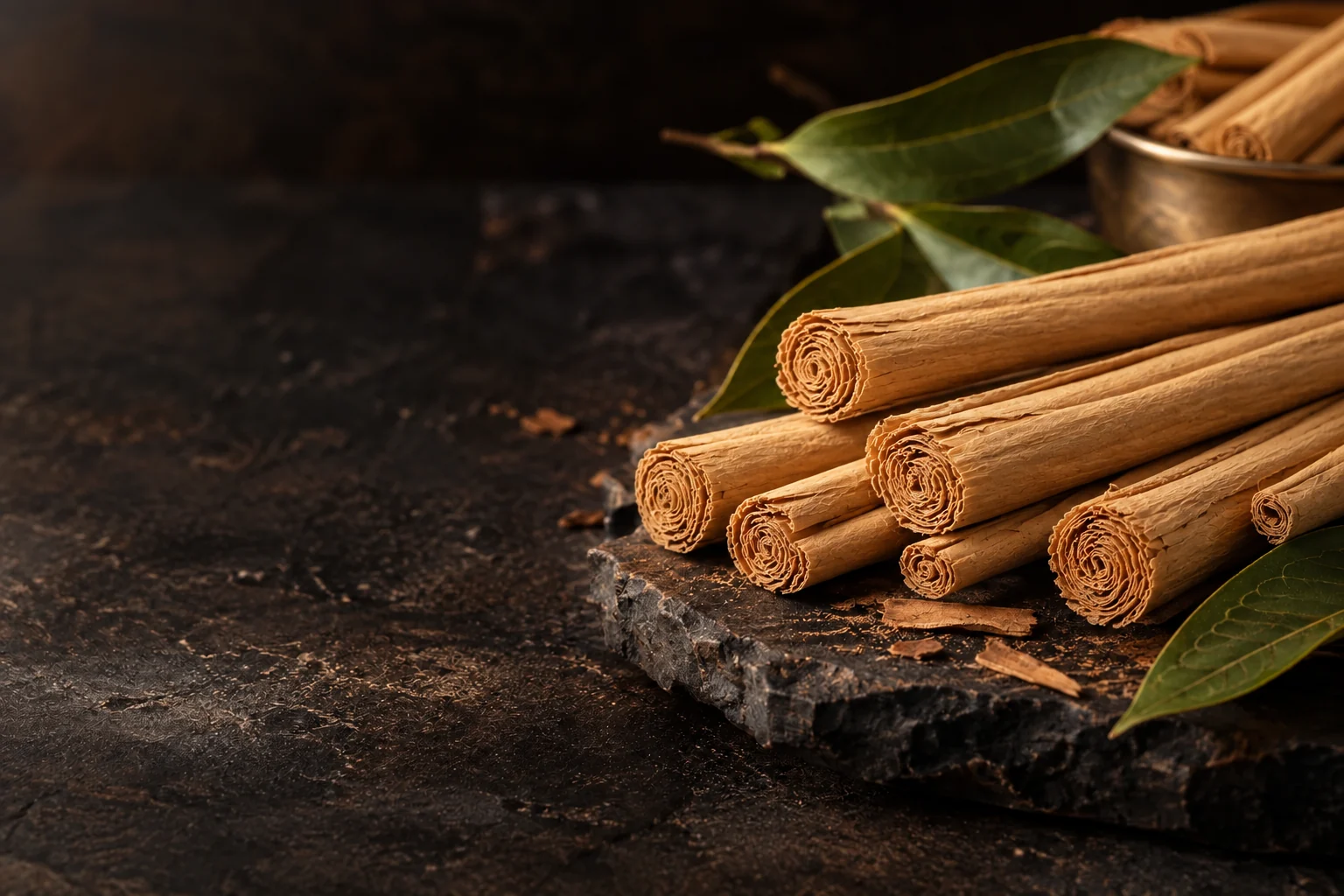
| Whole quill | Many fine, rolled layers packed together | A comparatively thick layer curled into a roll |
| Coumarin | Typically low levels | Typically higher levels, varying between products |
| When ground | Cannot reliably be identified by appearance alone | Cannot reliably be identified by appearance alone |
| Best buying question | Does the label name Ceylon cinnamon or the species? | Does the supplier identify the cinnamon type? |
The quill and coumarin differences above are described by the German Federal Institute for Risk Assessment (BfR). Treat a visual check as a useful clue, not proof of a product’s identity.
Why coumarin comes into the conversation
Coumarin is a naturally occurring substance. BfR advises moderate cassia consumption and points frequent users of larger culinary amounts toward low-coumarin Ceylon cinnamon. This is not a claim that an ordinary serving of cassia is inherently dangerous, or that Ceylon cinnamon can be used without limits.
Food use and supplement use are different decisions. NCCIH says research does not clearly support cinnamon for treating any health condition. If you are considering supplements, especially while taking medicines, discuss them with a healthcare professional. Read NCCIH’s evidence and safety summary.
How to make a considered choice
Start with your recipe, then the label. For whole quills, examine the layered structure and ask the seller to identify the species. For powder, prioritise clear naming and traceable product information over colour or a photograph. Ask what is in a blend, rather than assuming that every cinnamon tea or capsule contains only cinnamon.
Buy a quantity that suits the way you cook. Keep the product sealed, read its care instructions and take time to notice how it works in your own recipes. A useful choice is one you understand, rather than one based on an impressive-sounding claim.
The most valuable detail on a cinnamon product is often the clearest one: what it actually contains.
At Ceylentra, we encourage questions. Explore our cinnamon sticks and powder collection, or ask our team for information about a specific product before ordering.